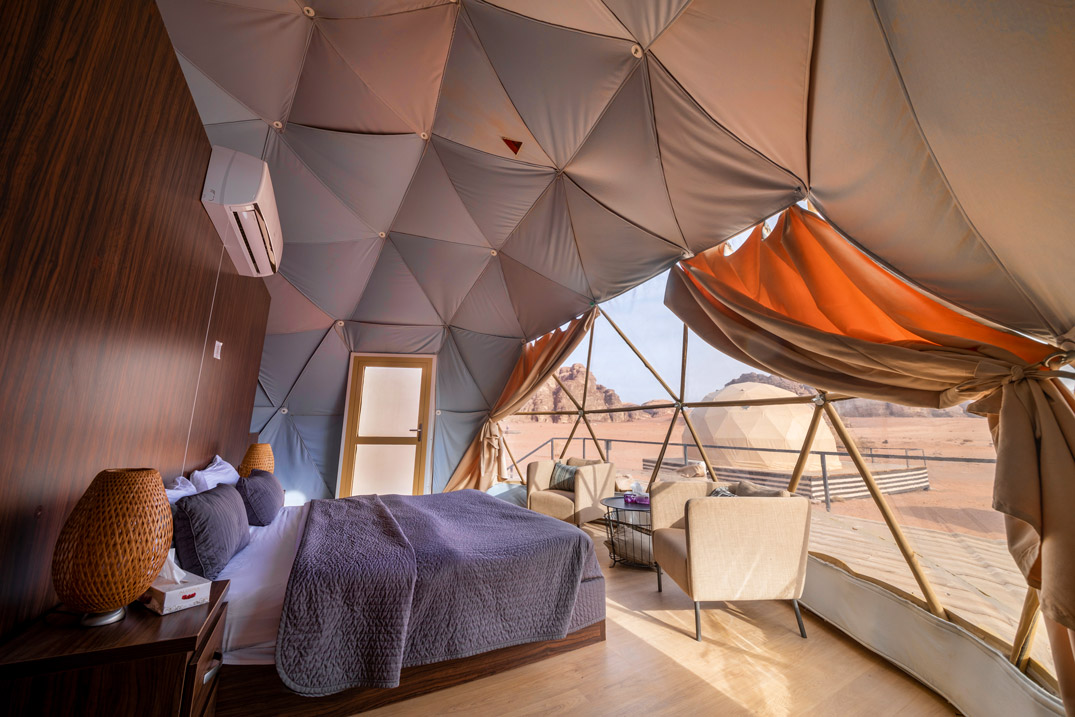
If you've spent any time researching Wadi Rum camps, you've already noticed the problem. There are over 60 camps in the protected area. Booking.com lists most of them with names that blur together. You can't tell them apart from a search results page. So here's an honest breakdown — written by a camp that's been here since the beginning, by people who grew up in this valley.
The four real categories of Wadi Rum camps
Forget the marketing terms. There are four actual types of accommodation in Wadi Rum:
1. Traditional Bedouin tents
Goat-hair fabric, low ceilings, communal everything. Mattresses on the floor or simple cots. Shared bathrooms in a central block. No air conditioning, sometimes no electricity beyond evening lights. Authentic. Cheap ($25–60 a night). Right for hardcore travelers who want the closest thing to how Bedouin families actually lived.
Right for: Backpackers, photographers chasing minimalism, students.
Wrong for: Anyone over 50, anyone who needs a real bathroom, summer travelers.
2. Standard private tents
The most common Wadi Rum camp type. Solid-frame tents with proper beds, sometimes en-suite bathrooms, sometimes shared. AC is hit or miss. Quality varies wildly — a $80 tent at one camp can be better than a $180 tent at another.
3. Bubble tents (transparent domes)
Inflatable plastic shells, fully transparent. Internet-famous. Look stunning at sunset. Reality check: transparent walls mean privacy issues. AC struggles against direct sun. Most are placed in clusters of 8–10 within a few meters of each other.
4. Martian Domes (solid panoramic domes)
SunCity Camp introduced these to Wadi Rum. Solid geodesic shells with a single large panoramic window facing the view. AC, heating, queen bed, en-suite bathroom inside the dome itself. Fully private.
What matters more than the tent type
After 10+ years of hosting guests, here's the truth: the tent type matters less than four other things.
1. Location inside the protected area
Wadi Rum is huge — over 720 square kilometers of protected wilderness. Where your camp sits inside the park matters more than what the tent looks like. SunCity sits at the canyon wall — sheltered position, dramatic east-facing views, 10 minutes from the visitor centre.
2. The food
Every camp says they serve Zarb. Few do it right. Real Zarb is meat and vegetables slow-cooked underground in a covered pit for 4+ hours. Many camps fake it — pre-cook the food, then briefly place it in the pit for the photo moment. Ask: "How long is the Zarb actually in the ground?"
3. The guides
A Wadi Rum trip is only as good as the Bedouin guide who takes you out. Camps with their own staff guides — born in Wadi Rum, multi-generational knowledge of the canyons — give you a completely different experience than camps that hire from a rotating pool of freelance drivers.
4. What's actually included
Always ask: Is dinner included? Is breakfast included? Is a sunset tour included? Are airport transfers included?
Questions to ask any camp before you book
1. Is the dinner Zarb truly cooked underground for 4+ hours?
2. Is the bathroom inside my tent, or in a shared block?
3. Is air conditioning included and how is it powered?
4. Is the sunset jeep tour included in the rate?
5. Is breakfast served fresh or pre-prepared?
6. How far is my tent from the next tent?
7. Do you have a real Bedouin guide on staff?
8. What is your cancellation policy?
Book direct, every time
OTAs (Booking.com, Expedia) charge camps 15–18% commission. Every Wadi Rum camp — including ours — gives the same room cheaper when you book direct, because we save the commission. Book direct at suncitycamp.com for the best rate, every time.
Ready to book? See live availability at suncitycamp.com. Best-rate guarantee on direct bookings.