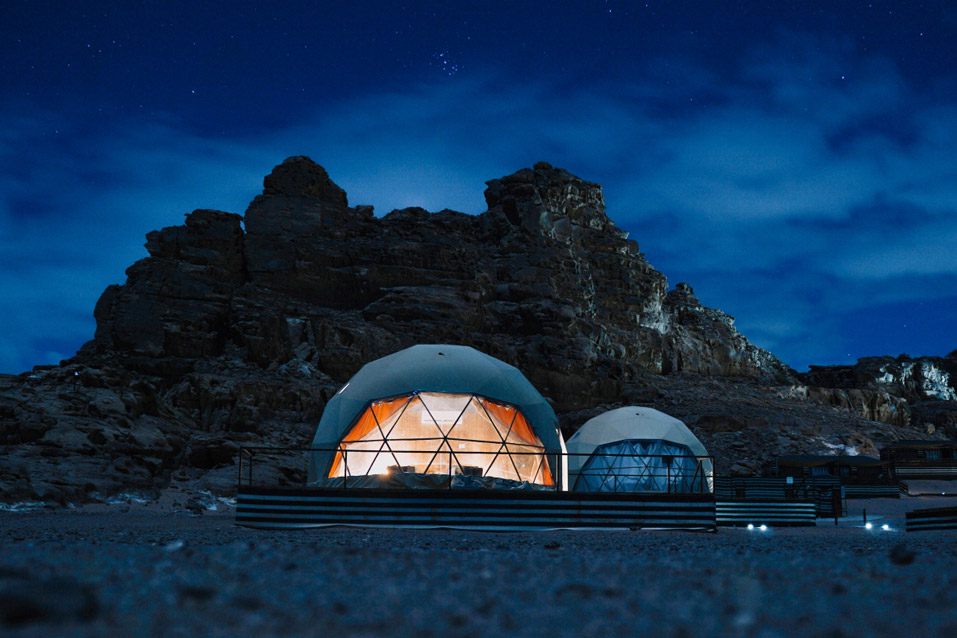
Most people who visit Wadi Rum come for the landscape. The ones who stay a second night come for the sky. Wadi Rum has Bortle class 2 dark skies — among the darkest in the northern hemisphere. The Milky Way is visible most clear nights with the naked eye. The skies here are quietly one of the best stargazing destinations on Earth, and almost no one talks about it.
What Bortle 2 actually means
The Bortle scale is a 1-9 measurement of night sky darkness. Class 1 is the darkest possible — only a handful of places on Earth. Class 9 is inner-city sky where you see only the brightest 5-10 stars. Wadi Rum sits at class 2.
At class 2 you see:
- The Milky Way as a bright structured band with visible dust lanes
- 4,000+ stars to the naked eye
- Andromeda galaxy as a clear smudge
- Zodiacal light at the right hours
- Visible airglow
- Satellite passes every 5-10 minutes
The best months for stargazing
| Month | Conditions | What's up |
|---|---|---|
| October | Perfect — clear, warm enough | Andromeda, Milky Way core setting |
| November | Excellent, cooler nights | Pleiades, Orion rising |
| December-February | Cold but clearest skies of the year | Orion, Sirius, Geminids meteor shower (Dec) |
| March-May | Mild, occasional spring haze | Leo, Virgo, galaxy season |
| June-August | Hot but clear, Milky Way core peak | Sagittarius, galactic center directly overhead |
Best single night: mid-July, no moon, Milky Way core overhead from 22:00 to 02:00.
Plan around the moon
The single biggest factor in your stargazing night is the moon phase. A full moon washes out the Milky Way completely. New moon gives you maximum darkness.
Check the moon phase for your travel dates before booking. Aim for new moon ±5 days. Most stargazing guides recommend 3-7 days after new moon for the best mix of darkness and moonless evening hours.
What you'll see without a telescope
- The Milky Way — bright enough to cast a faint shadow on moonless nights
- Andromeda Galaxy — visible to the naked eye, look northwest in autumn
- Satellites — Starlink trains, ISS passes, dozens of single satellites per hour
- Meteors — even outside meteor shower peaks, 4-8 per hour on a dark night
- Zodiacal light — pyramid of light along the ecliptic, visible in spring after sunset and autumn before sunrise
Famous meteor showers
- Perseids — August 11-13. 60-80 meteors per hour. The big one.
- Geminids — December 13-14. 100-120 meteors per hour. Underrated.
- Quadrantids — January 3-4. Short but intense.
- Lyrids — April 22-23. Modest but worth it.
How to plan a stargazing night at SunCity
1. Book a Martian Dome (the panoramic window faces east — Milky Way visible from bed in summer).
2. Check the moon phase for your dates.
3. Arrive in the afternoon, do the sunset tour, eat Zarb dinner around the fire (20:00-21:30).
4. Step outside at 22:00 — let your eyes adjust for 20 minutes in full darkness.
5. Lay on a blanket in front of your dome and look up.
For serious viewing, ask reception to arrange our astronomy guide — a local who can point out constellations, planets, and explain the seasonal sky in 45 minutes. Available on clear nights.
What to bring
- Red-light flashlight (white light kills night vision for 20+ minutes)
- Warm layers — desert nights drop fast even in summer
- Star app like Stellarium or SkyView (works offline once downloaded)
- Binoculars beat a small telescope for casual viewing
- Camera with manual mode for Milky Way long exposures (15-20s, ISO 3200, f/2.8)
Ready to see what a real dark sky looks like? Book a Martian Dome direct at suncitycamp.com — best-rate guarantee, sunset tour included.